
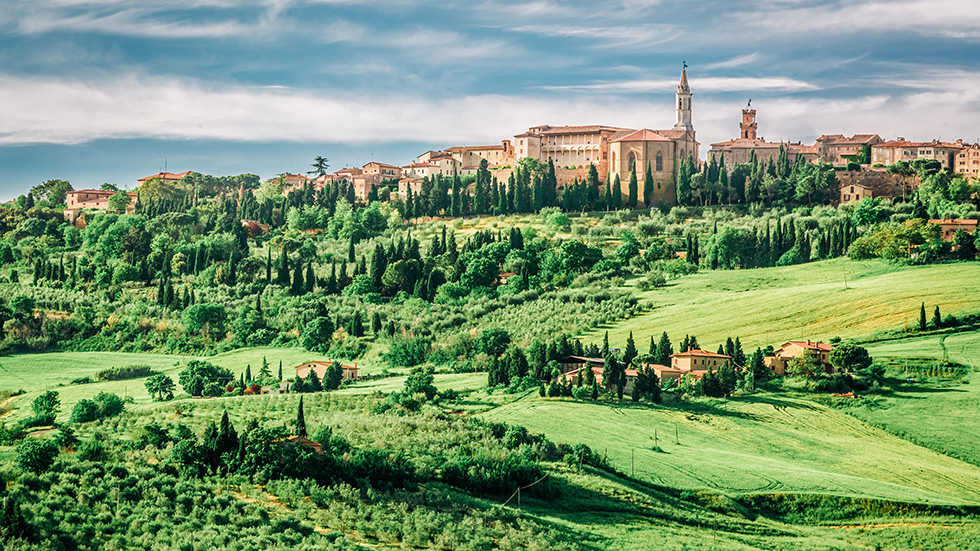
Last fall, I found myself standing in a town that shouldn’t exist. At least not in the way it does.
Pienza, Italy is small. Quiet. Almost suspiciously perfect. The kind of place that feels less like it evolved over time and more like it was… decided. Because it was.
In the 1400s, Pope Pius II—born Enea Silvio Piccolomini—looked at his humble hometown of Corsignano and saw something different. Not what it was, but what it could be. And instead of simply improving it, he reimagined it entirely. He transformed it into Pienza, the Renaissance’s version of an “ideal city,” designed not just as a collection of buildings, but as a complete human experience.
Standing there 600 years later, you can feel the difference.
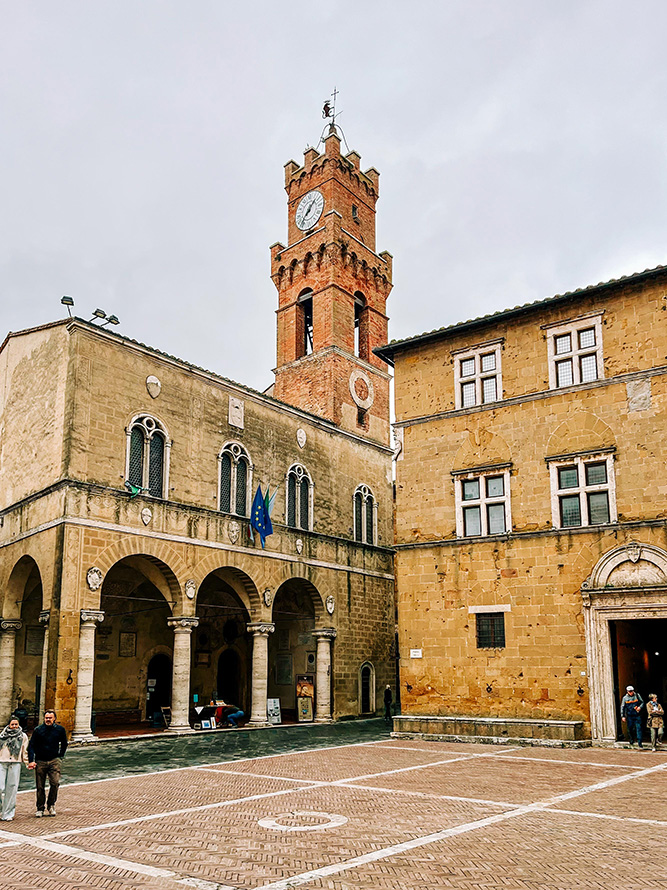
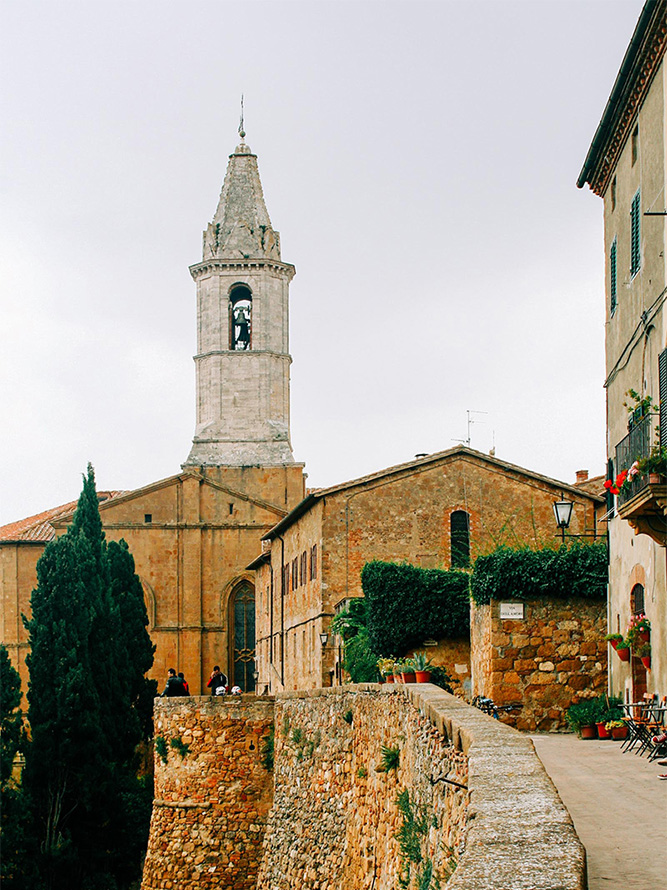
You enter the main square and something clicks. Not in a grand, overwhelming way. There’s no spectacle to it. It just works. The cathedral anchors one side. The palazzo balances another. The proportions feel right. Sightlines open and close with intention. Even the way light moves through the space feels considered. Nothing is competing for attention, yet everything holds its place.
You don’t stop to analyze it. You simply feel it. And that’s exactly the point.
Piccolomini wasn’t designing for tourists or chasing recognition. He wasn’t trying to create something loud or attention-grabbing. He was designing for people—for how they move through space, how they gather, how they experience a place without needing to think about it. He understood something that still feels elusive today: the best design doesn’t announce itself. It disappears into the experience.
We talk a lot about placemaking in our world. At Alys Beach. At Bluestone Peak. It’s a term that gets used often, and sometimes loosely. But standing in Pienza, you realize this idea isn’t new. It’s just been overcomplicated.
Piccolomini didn’t have a brand framework or a deck full of insights. What he had was clarity of intent. Create a place that feels good to be in and let everything else follow. That kind of restraint is harder than it sounds.
At Alys Beach, you see a similar discipline. The white architecture, the cohesion, the commitment to a singular vision that doesn’t bend to trends. It isn’t trying to be everything to everyone. It’s trying to be right. Bluestone Peak, in its own way, is chasing that same idea—not by replicating what’s been done, but by approaching the land and the experience with intention. How do you create something that invites people in without overwhelming them? That feels cohesive without feeling forced? That reveals itself over time instead of all at once?
These are the same questions, just asked in a different era.
In the handful of times I’ve visited, what strikes me most about Pienza isn’t necessarily what was there. It was what wasn’t. There’s an absence of excess, a lack of unnecessary flourishes, a noticeable restraint in every decision. Nothing feels added for the sake of it. Everything serves a purpose, and more importantly, serves the whole.
In marketing, we tend to move in the opposite direction. We add. More messaging. More features. More campaigns. More layers. We equate complexity with value, and activity with progress. But Pienza offers a different perspective. It suggests that subtraction, not addition, is often where clarity lives.
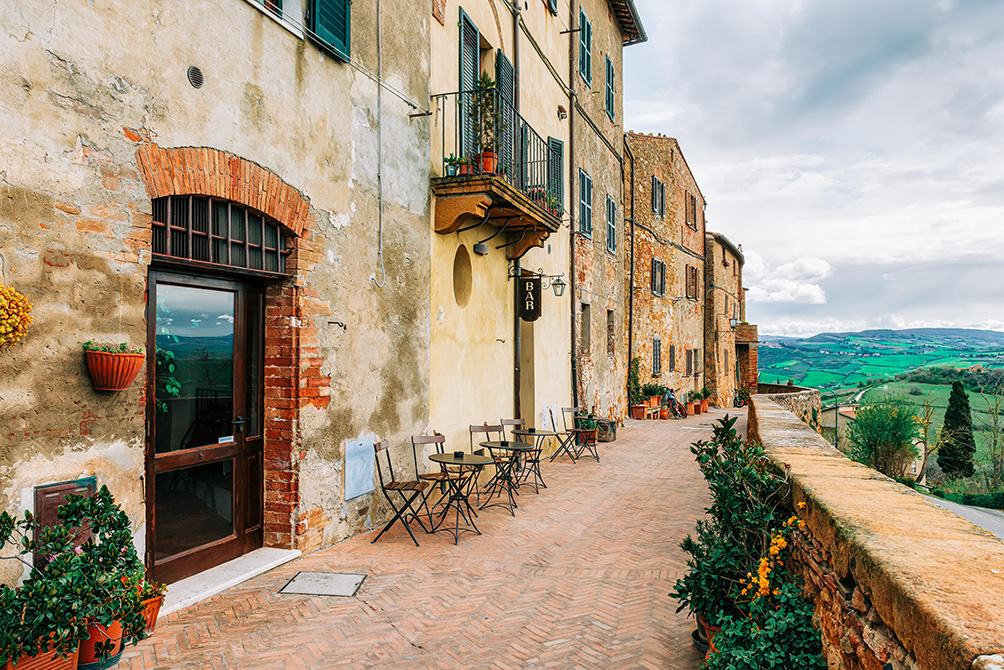
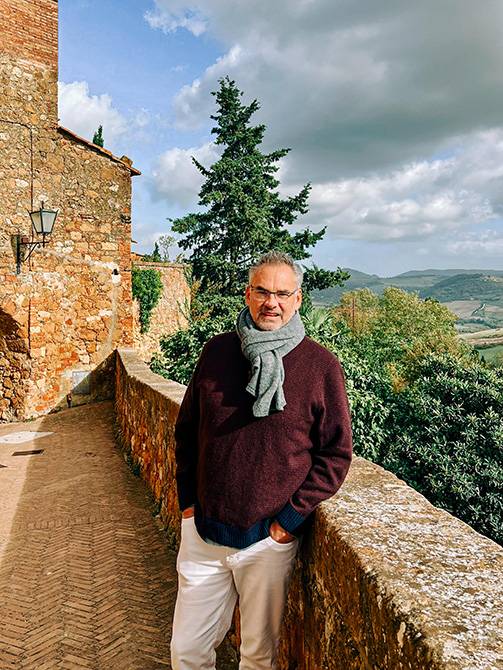
There’s a moment in the square where the town opens up to the Val d’Orcia. Rolling hills stretch out beyond the architecture, uninterrupted and expansive. The transition feels seamless, as if the town and the landscape were always meant to coexist this way. It feels effortless, even though it clearly wasn’t.
Because someone had to decide. What belongs here. What doesn’t. What matters. What can be left out.
Piccolomini made those decisions centuries ago, and they’re still holding up.
That’s the thing about truly great ideas. They don’t expire. They don’t need to be reinvented. They just resurface, often in the quietest places, reminding us of what we already know but tend to forget.
Pienza isn’t remarkable because it’s grand. It’s remarkable because it’s intentional. And in a world that keeps pushing for more, faster, louder—that kind of clarity might be the boldest move of all.